
In 2026 choosing the right Library Management System (LMS) is a critical decision for your library. Key considerations include the necessary core functionality (circulation, cataloguing, reporting) and exceptional user experience for both staff and members. Also consider vendor support and training options, total cost of ownership (licencing, installation) and the system’s overall scalability and flexibility to meet future needs.
Below is a comprehensive checklist recommended by Libero by Knosys to help you evaluate and select the best LMS for your library.
Table of Contents
1. What core functionality should your LMS include?
2. What are the essential factors for a top-tier LMS user experience?
3. How will the LMS be implemented and supported?
4. Is the LMS reliable and secure?
1. What core functionality should an LMS include?
Ensure the LMS includes essential features such as:
- Cataloguing for organising and maintaining your collection.
- Circulation Management to streamline borrowing and returns.
- Acquisitions & Serial Management for handling new materials and subscriptions.
- Member Account Management for easy access and control.
- Search & Discovery tools to help users find resources quickly.
- Reporting & Analytics for data-driven decision-making.
2. What are the essential factors for a top-tier LMS user experience?
A great LMS should prioritise usability and accessibility:
- Easy to use with intuitive interface(s): Is the system user-friendly for both library staff and members? Library members should be able to quickly grasp and find what they need, borrow materials, and manage their accounts without extensive training.
- Multi-device access: Does the vendor have a mobile offering in addition to their online WebOPAC? A library app will complement your main LMS by offering the same functionality accessible on a mobile device.
- Excellence in search and discovery capability: Will the LMS meet the needs of members when they are searching for content? For example, will they be able to find content from multiple sources in the same search results? Will the system recommend items for members to explore further?
3. How will the LMS be implemented and supported?
Before committing to purchasing an LMS, understand the vendor’s approach to:
- The implementation process: What is involved in the LMS implementation? Does the vendor provide onboarding, training, and migration support? Understand from the vendor how this works to ensure the successful implementation of your new LMS.
- What support options are available? What channels and response times are offered?
- Cost structure: Understand the proposed investment model and ask questions about the cost structure for the LMS you are evaluating. Things to consider includes upfront cost, ongoing maintenance fees, subscription fees, plus any additional costs for potential future training and development.
4. Is the LMS reliable and secure?
In 2026, on-premise servers are increasingly becoming legacy risks. Prioritise a SaaS (Software as a Service) LMS to ensure your data is accessible from anywhere.
- Scalability: Can the LMS grow with your library’s membership and collection?
- Data Security: What are security features are included? The LMS should provide strong security to protect member data and library resources. Does the vendor provide a single-tenanted approach?
- Integrations: Are there integrations with other systems? Can the LMS securely integrate with other library systems or other digital library content you use? Does it use standard protocols like OAI-PMH for sharing data across platforms?
Don’t forget these important tasks:
- Gather vendor references: Ask the vendor for references from current and past clients with similar library needs.
- Do your online research: Find out about the vendor’s development roadmap. Are they investing in new features? Read online reviews and comparisons of different LMS options.
Download LMS Checklist
Libero, by Knosys has outlined the key considerations to keep in mind when evaluating your next system. You can explore them below – or download the checklist for a quick, shareable reference.
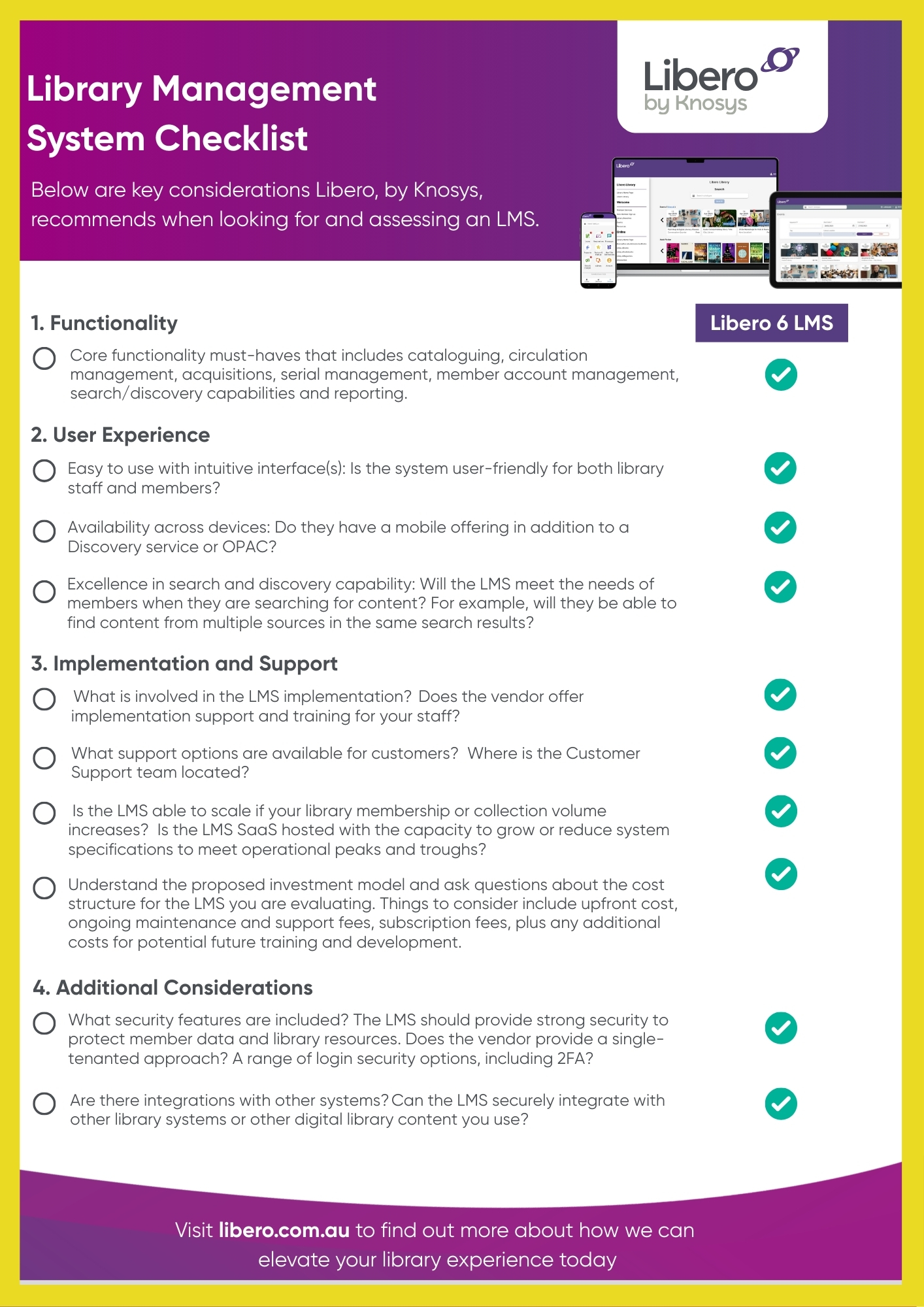
Make an informed choice
This checklist is designed to facilitate an informed decision-making process when selecting a library management system that aligns with your library’s specific requirements.
Libero, by Knosys, has been supporting and elevating the library experience for over 35 years and understands the evolving needs for both staff and the communities they serve. To learn more about a Libero 6 LMS contact us today or request a demo.