
Imagine a library where, alongside books, you could borrow a power drill, a sewing machine, a tent, or even an ice-cream maker. Welcome to the Library of Things — a modern evolution of traditional libraries that offers an alternative to access the tools and items we need, without owning them.
What is the Library of Things?
The Library of Things provides library members with an opportunity to borrow items that they may only need occasionally, rather than having the expense of purchasing them outright. The Library of Things can include a range of items. Examples include:
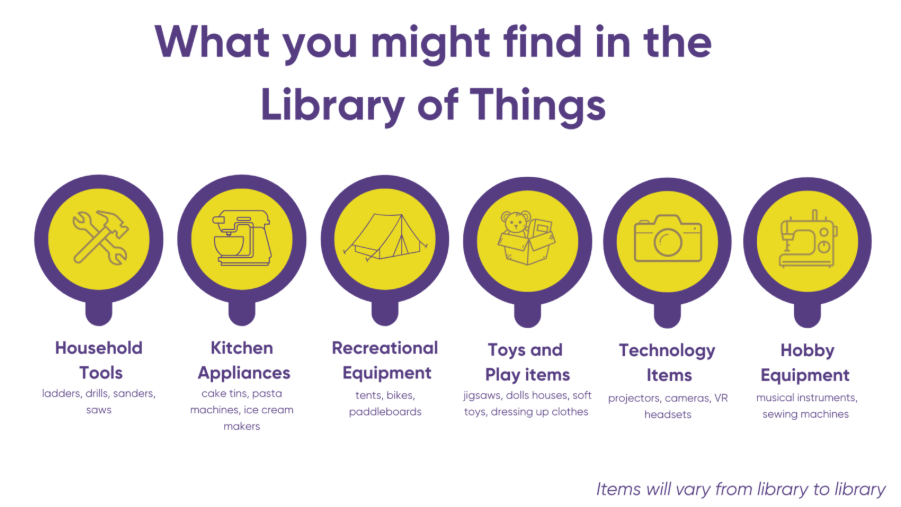
A Library of Things is often run in partnership with a public library. Their size and scope vary depending on location and community needs.
Why borrow rather than buy?
The Library of Things supports several societal themes that are gaining momentum in today’s world:
- Sustainability. By reducing the number of items that need to be manufactured, transported, and eventually discarded, Library of Things help decrease overall consumption and waste.
- Affordability. With cost‑of‑living pressures making spending on certain items harder to justify, many people can’t afford a high‑end food processor or camping gear they’ll only use once. A Library of Things removes that barrier, giving everyone access to costly or specialist items, regardless of income.
- Decluttering. How many items do we own that we only use once or twice a year? The average drill, for example, is used for just 20 minutes in its lifetime . Borrowing instead of buying helps reduce clutter in homes and storage spaces
- Community Building. Fosters community spirit by encouraging resource sharing. Many also host workshops, DIY classes, and skill-sharing events.
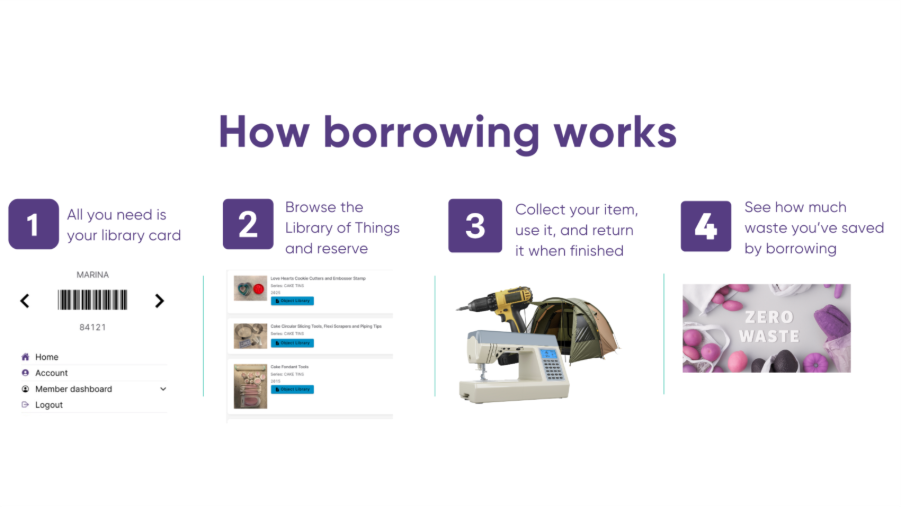
Supporting the Library of Things with a Libero 6 LMS
A Libero 6 Library Management System (LMS) supports a Library of Things in many practical ways:
1. Flexible Cataloguing and Metadata Management
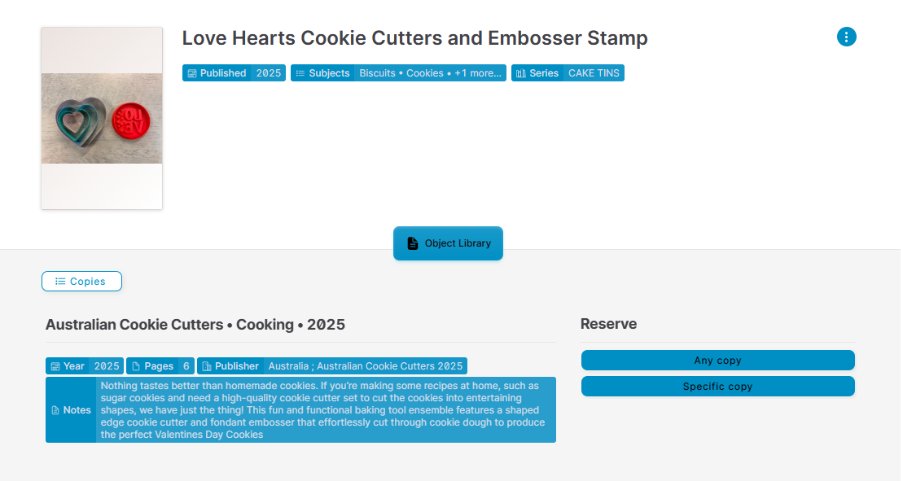
Libero 6 enables rich metadata creation (such as make, model, instructions, and safety guidelines) tailored to various item formats. This ensures items are easily discoverable by the public. Below is an example of that (the Notes section in blue box) Figure 1: Metadata. Any data published here is discoverable in Libero Discovery
Figure 1: Metadata
2. Intuitive Search and Discovery
Today’s library members expect to search catalogues online and request materials easily. Libero 6 search and recommendation features ensure that they can discover relevant resources. Libero 6 Discovery makes it easier than ever for members to find the items and resources they need. Watch our video below
3. Comprehensive Collection Management and Inventory Control
Tracking the physical location of items is essential. Libero 6 provides precise location management, supports inventory checks (including barcode or RFID scanning), and tracks items on loan or in transit – reducing the risk of loss or misplacement. Staff can also record condition updates, damage reports, and maintenance schedules.
Conclusion
The Library of Things demonstrates how resource-sharing can reduce waste, save money, and spark community spirit.
Libraries that include non-traditional items in their catalogue need systems capable of managing complex item types, safety requirements and varied usage patterns. With its flexible features, a Libero 6 LMS supports these needs and empowers libraries to make a meaningful difference in their communities.
Interested in discovering more about how Libero can deliver an LMS for your library? Contact our team of experts to book a consultation.