

With a modern Library Management System (LMS), libraries have access to more functionality, more configuration options, and more opportunities to improve service delivery than ever before. But with increased capabilities comes an important reality; the system only delivers value when it is actively understood, shaped, and refined by people inside the library.
And behind every efficient, well-run library service is someone making sure the systems run efficiently to support the libraries day to day operations.
This person is commonly referred to as the library systems champion.
What is a library systems champion?
A library systems champion is not just a “superuser” or someone who fixes the occasional technical issue. They are the bridge between technology, people, and service delivery.
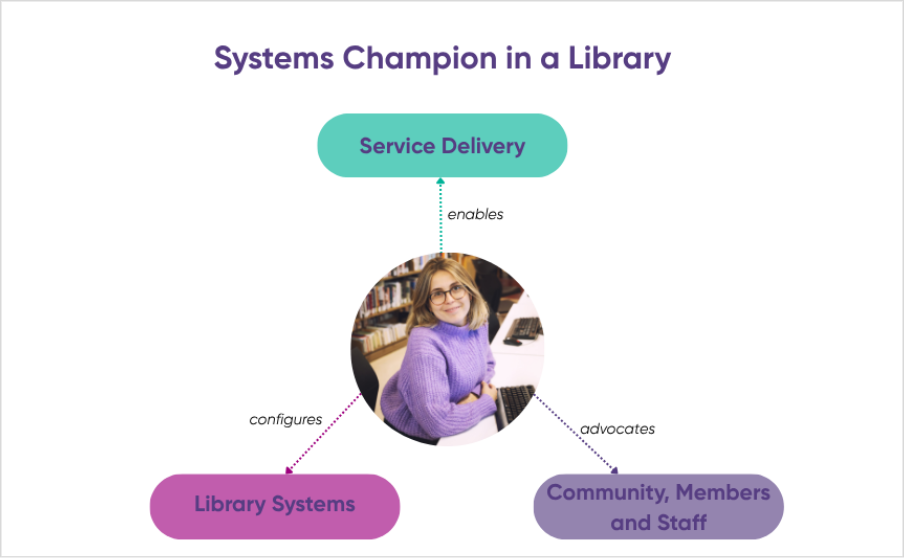
For LMS environments, in addition to supporting day-to-day circulation or cataloguing tasks, they are also working across the system to ensure it is configured and used in ways that genuinely support modern library service delivery.
They are the team members who:
- Understand how the LMS workflows connect across modules.
- Help staff navigate changes in the interface, features, or processes.
- Translate system capability into practical day-to-day use.
- Support consistent use of data, policies, and configurations.
- Identify inefficiencies or duplicated effort in workflows.
- Help teams make better use of reporting and insights.
- Build confidence across staff groups with various levels of technical support.
They make the system usable, reliable, and aligned to real-world library work.
Why Libero 6 makes this role even more important
A modern LMS like Libero 6 represents a shift toward a more flexible library management environment. With improved interfaces, enhanced workflows, and expanded configuration options, libraries are given more control over how the system supports their services.
But great flexibility also introduces complexity. Without strong internal expertise, libraries can unintentionally:
- Underuse powerful features.
- Maintain outdated workflows.
- Create inconsistent practices across branches or teams.
- Rely on workarounds instead of system functionality.
A systems champion helps prevent this drift. They ensure that Libero 6 is not just “installed and used” but actively optimised.
More than system knowledge
A common misconception is that a systems champion is primarily a technical role. Technical knowledge is only part of it – the real strength of a systems champion lies in their ability to connect people and systems.
They support:
- Change management: helping staff adapt confidently to system updates and new workflows.
- Training and coaching: building capability across teams, not just delivering one-off training sessions.
- Consistency: ensuring processes are applied uniformly so data and reporting remain reliable.
- Communication: translating technical system language into clear, practice guidance.
- Confidence-building: helping staff feel capable rather than overwhelmed by system complexity.
With Libero 6, the human side of the role becomes even more critical. The system can only be of value if people trust it, understand it, and feel supported in using it.
Driving continuous improvement in Libero 6
One of the most valuable contributions of a systems champion is embedding continuous improvement into everyday practice.
Rather than treating Libero 6 optimisation as something that happens only in updates or projects, the systems champion maintains an ongoing focus on refinement.
They ask questions like:
- Are we using Libero 6 in the most efficient way possible?
- Can this workflow be simplified or automated?
- Are we capturing and using data the system can produce?
- Where are staff creating workarounds instead of using built-in functionality?
- What slight changes could significantly improve service delivery?
A role worth investing in
In many libraries, the systems champion already exists – it just may not be formally recognised. It often grows organically from staff who are curious, solution-focussed, and willing to explore how things could be done better.
But when libraries intentionally recognise and support this capability, the impact is significant. In a Libero 6 environment having an internal champion ensures the library can:
- Keep pace with system development.
- Maximise return on investment.
- Support staff effectively through change.
- Continuously improve services over time.
In conclusion
While Libero 6 offers libraries flexibility, capability, and opportunity to improve community services, technology alone does not deliver better libraries – people do.
And the libraries that get the most out of systems like Libero 6, are the ones that invest in the people who understand them deeply enough to keep improving them.